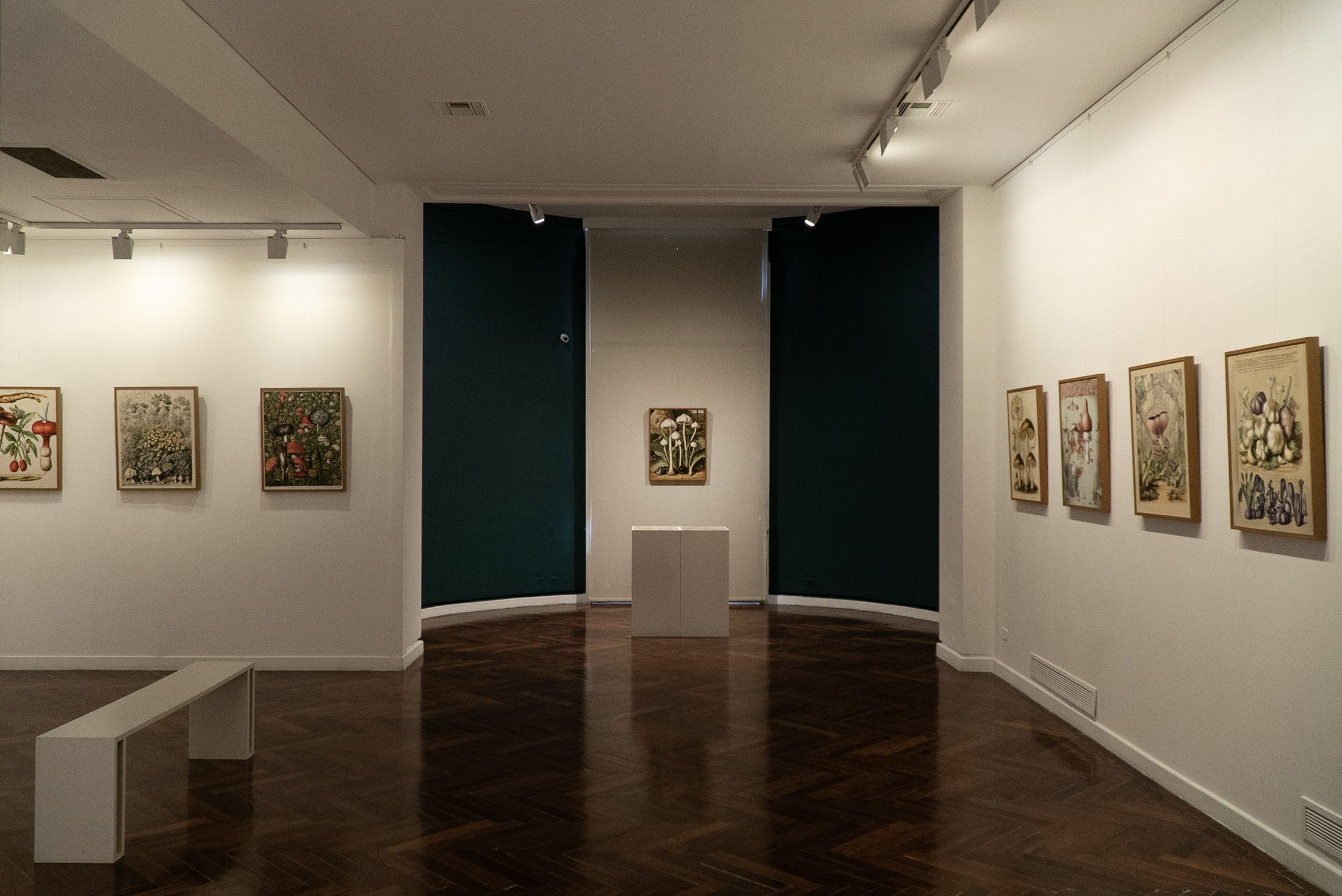
Exhibition at the Palacio Paredes (Brazilian Embassy in Argentina), curated by Nara Cristina Santos.
June 9 – July 25, 2026
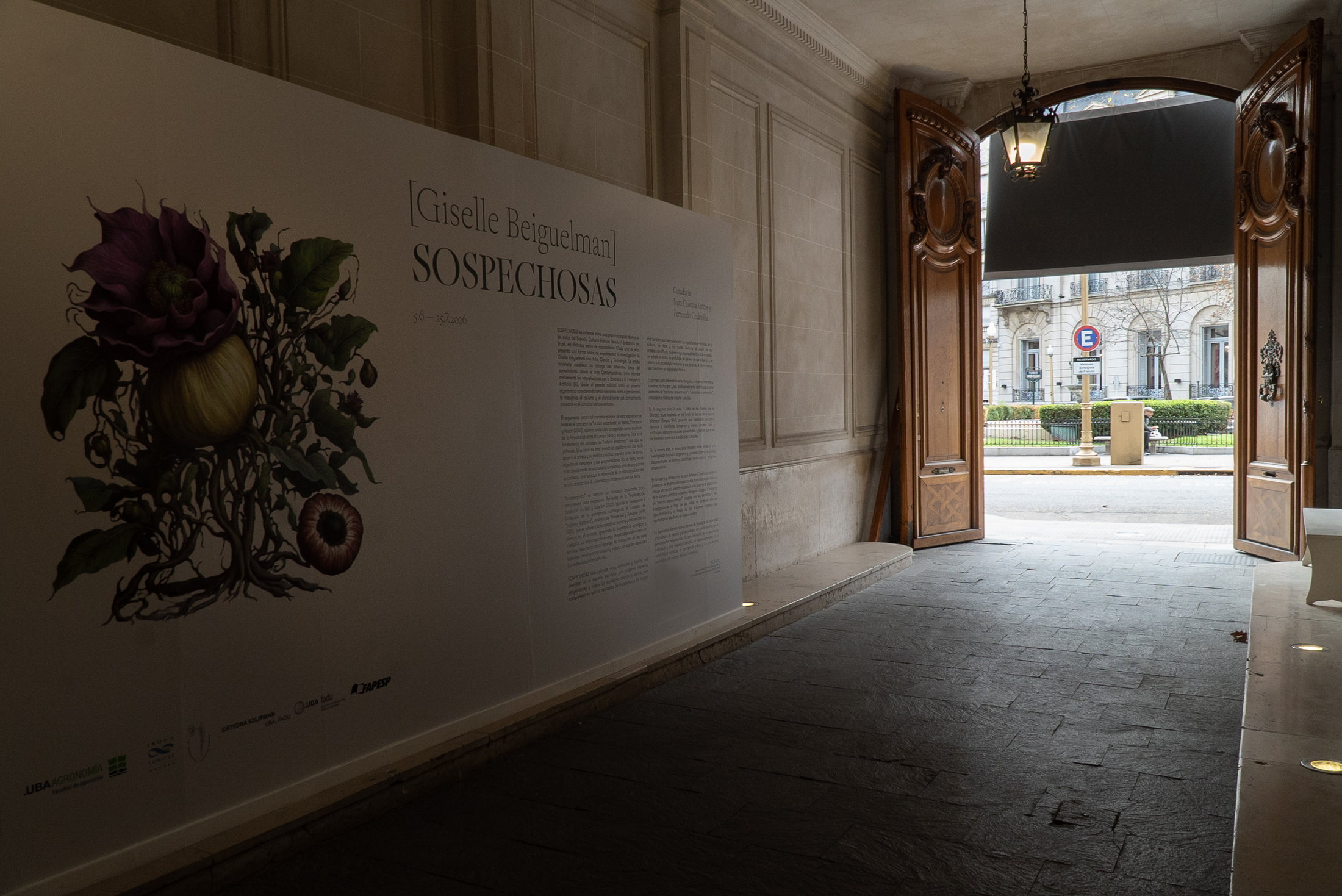
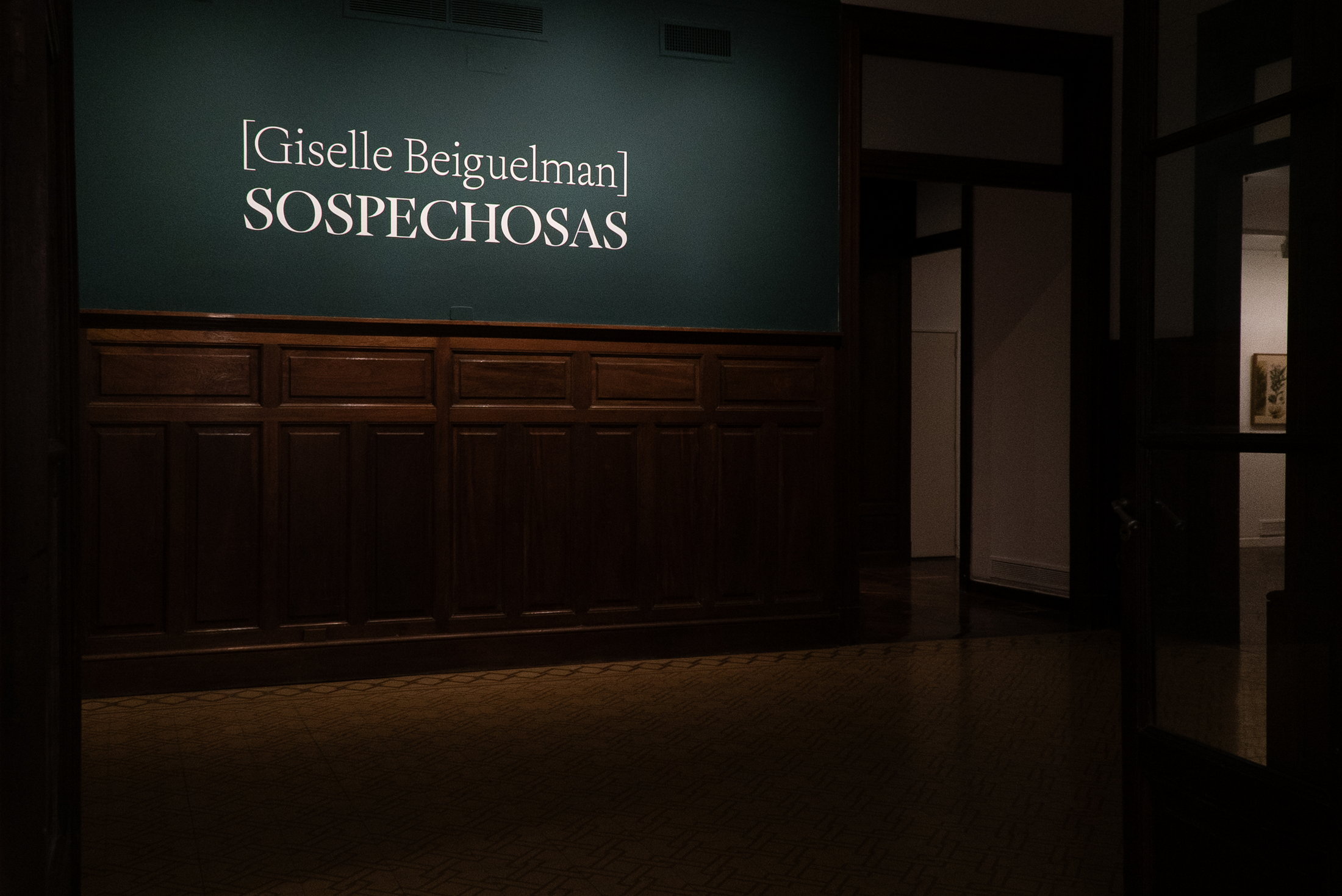
"SOSPECHOSAS" unfolds as a large-scale installation in the galleries of the Palácio Pereda Cultural Space/Brazilian Embassy, through a series of distinct exhibitions, each of which offers a unique way to experience Giselle Beiguelman’s research in art, science, and technology.
Drawing on contemporary art, the Brazilian artist establishes a dialogue with different fields of knowledge to critically examine the interrelationships between botany and artificial intelligence (AI), from the colonial past to the algorithmic present, while addressing relevant themes such as patriarchy, misogyny, racism, and the silencing of ancestral knowledge in the Latin American context.
The transdisciplinary curatorial argument for this exhibition is based on the concept of “embodied action” proposed by Varela, Thompson, and Rosch (2003), who view cognition as the result of the interaction between the physical body and its environment. This is the foundation of the concept of “embodied authorship” advocated here. A work of art created in collaboration with AI encompasses the artist and their creative poetics, large databases, complex algorithms, and their programmers. Therefore, it is not merely a matter of shared authorship, but of embodied authorship, which underscores the significance of the artist’s intentionality in creating with AI and critically engaging with the data.
“Imperception” is also an important concept for understanding this exhibition. Derived from Ursi and Salatino’s (2022) concept of “botanical imperception,” it refers to the absence or limitation of perception—a term used to replace “botanical blindness,” as defined by Wandersee and Schussler (1999, 2001), which refers to the human inability to perceive plants in the environment, thereby ignoring their ecological and biological importance. In this exhibition, imperception emerges as a provocative term that challenges us to rethink human interaction with the natural and cultural environment—whether with species or companion machines.
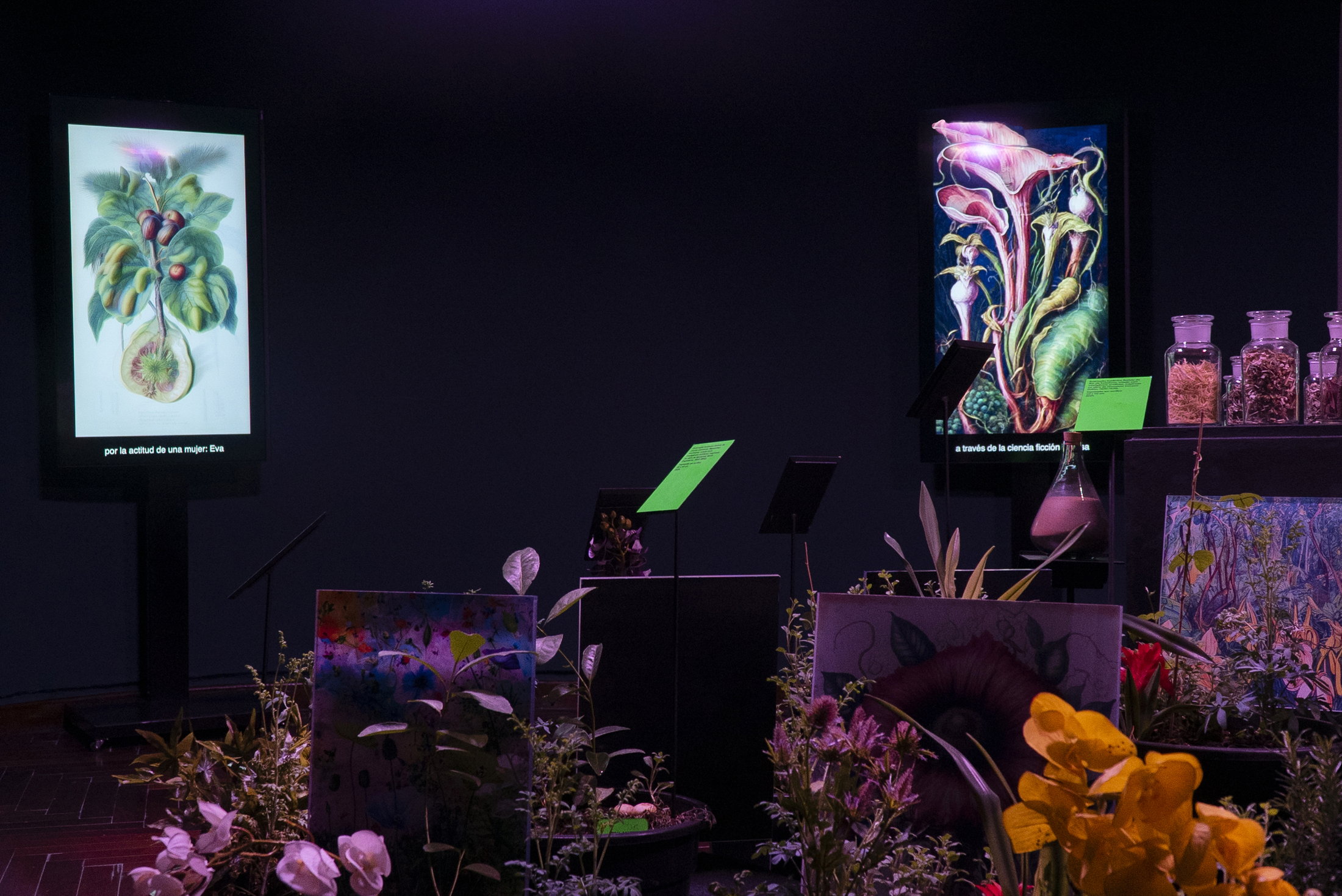
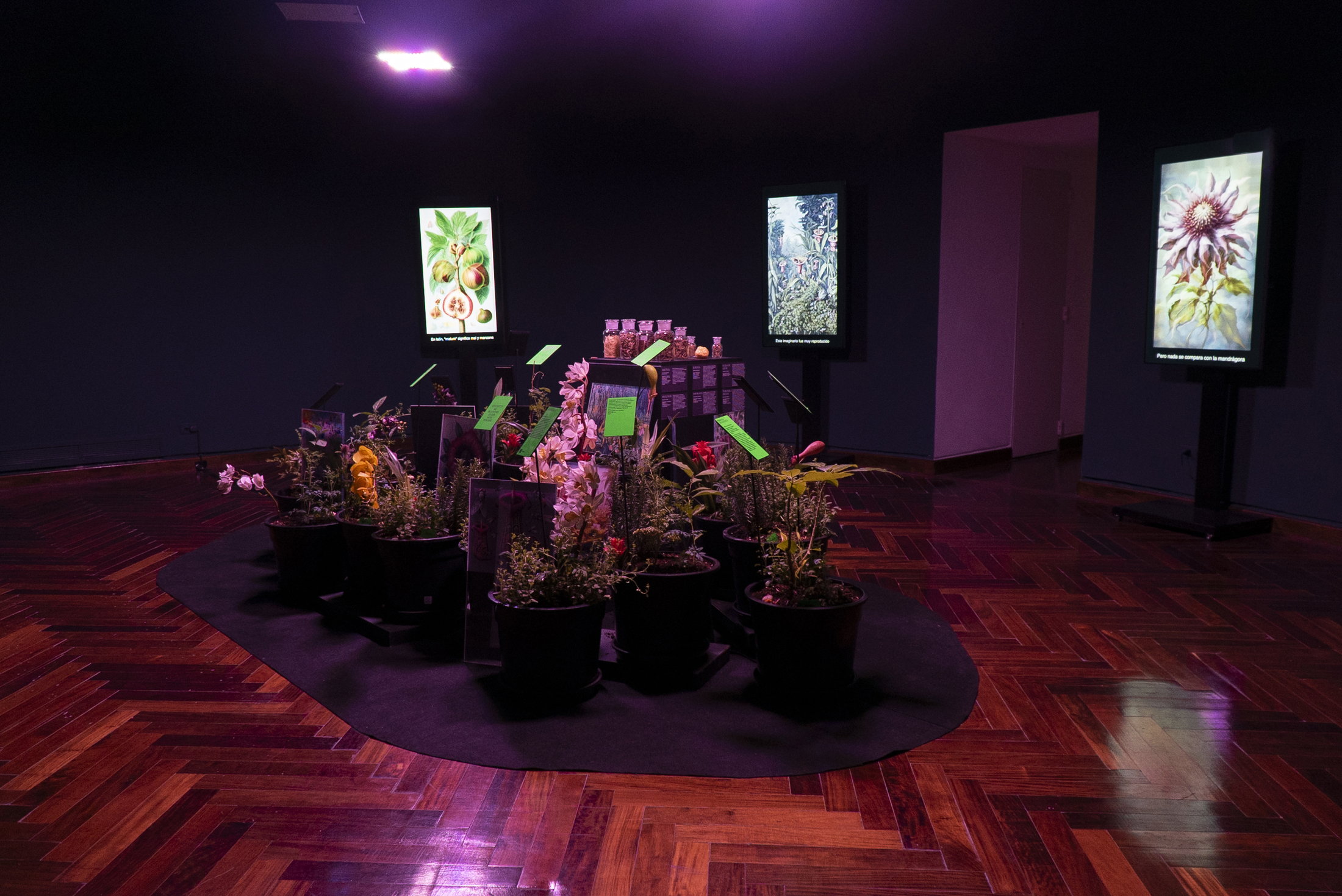
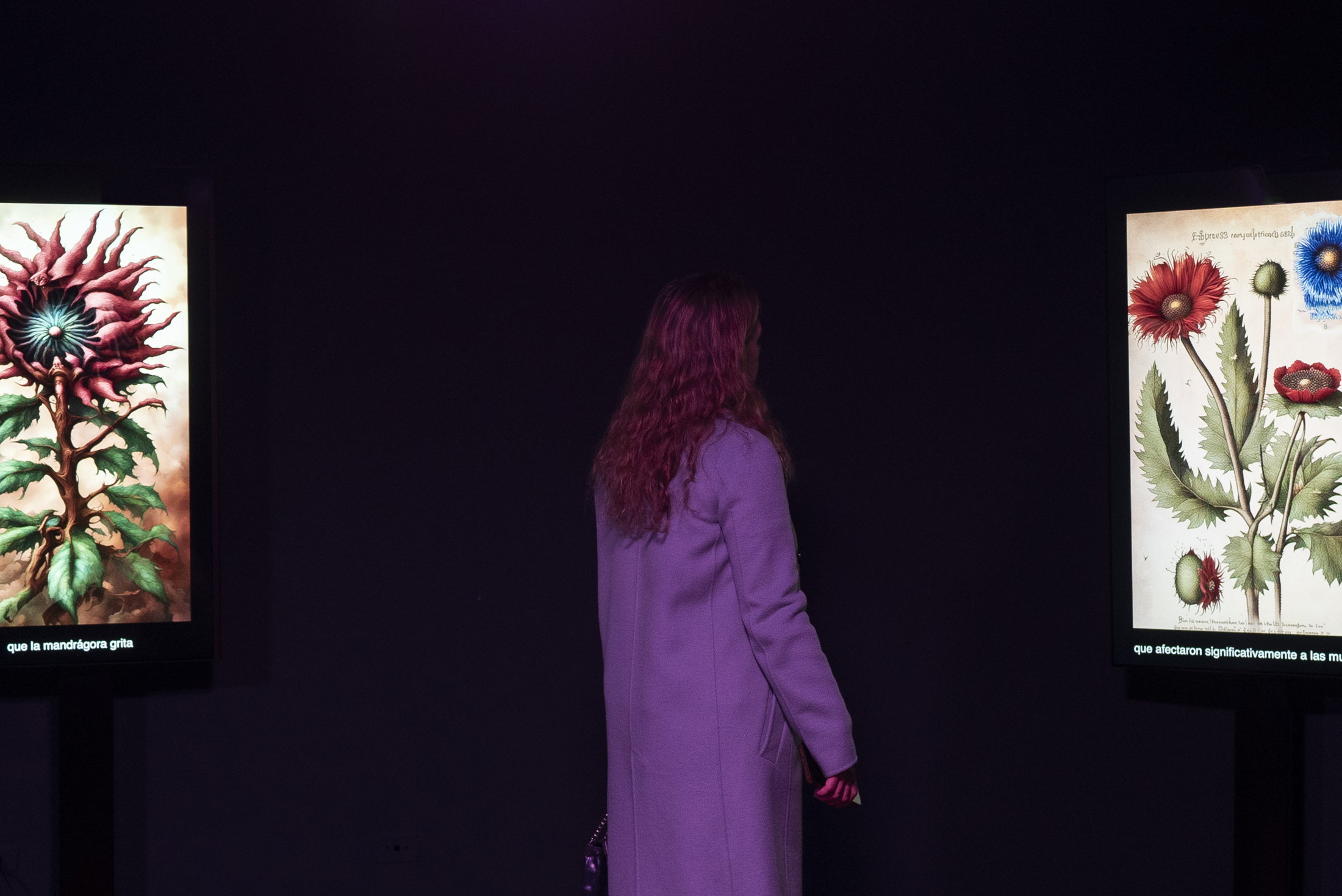
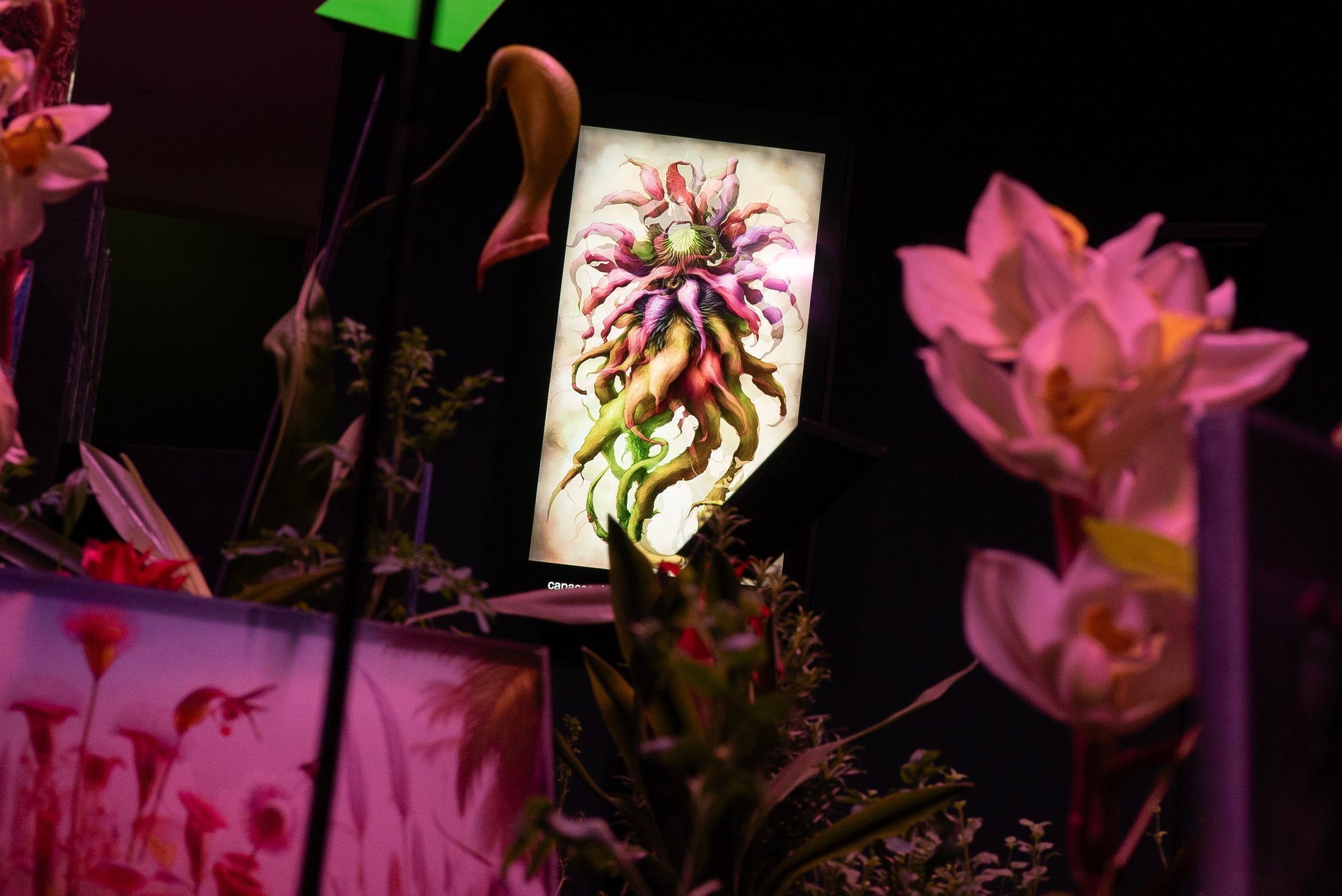
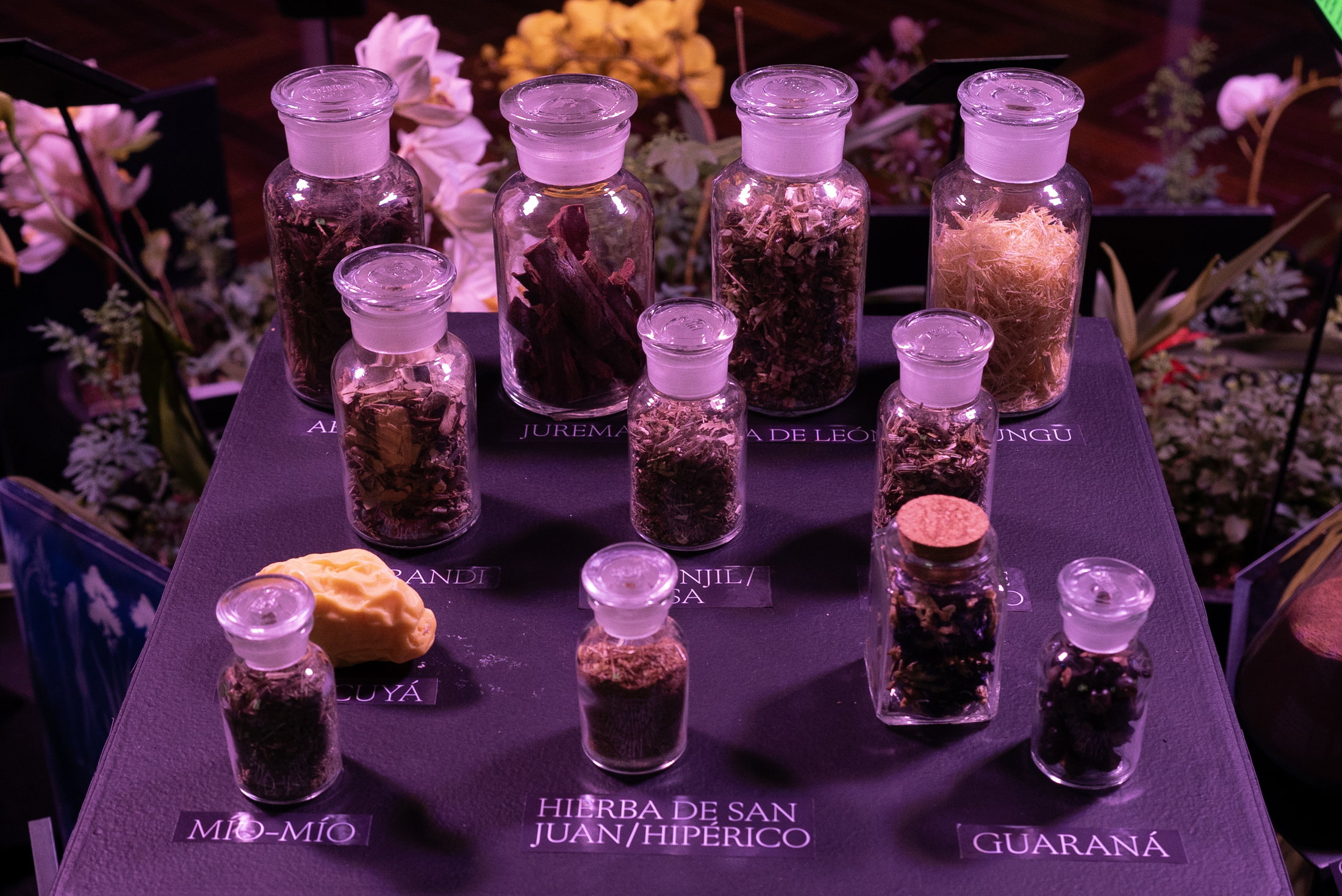
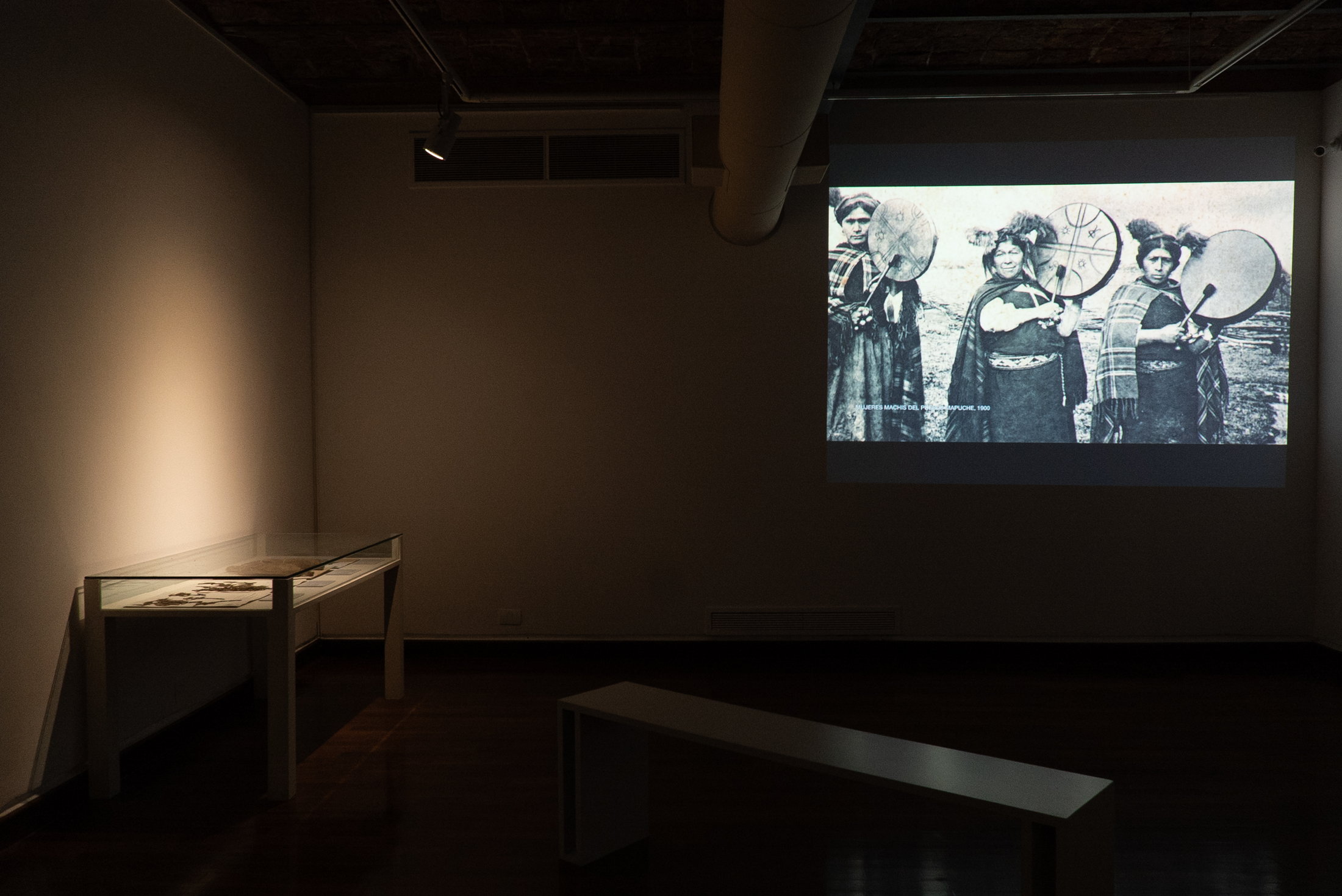
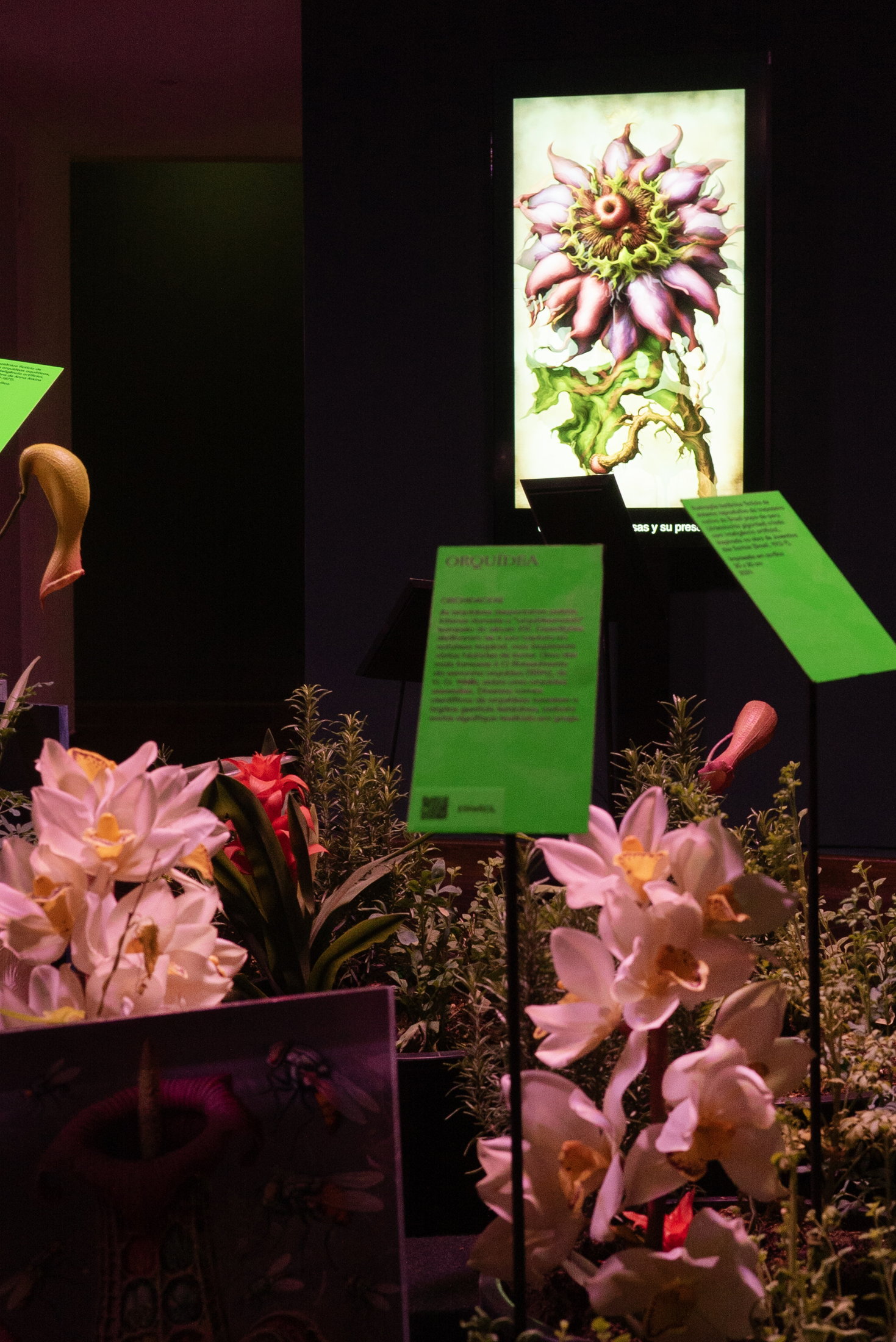
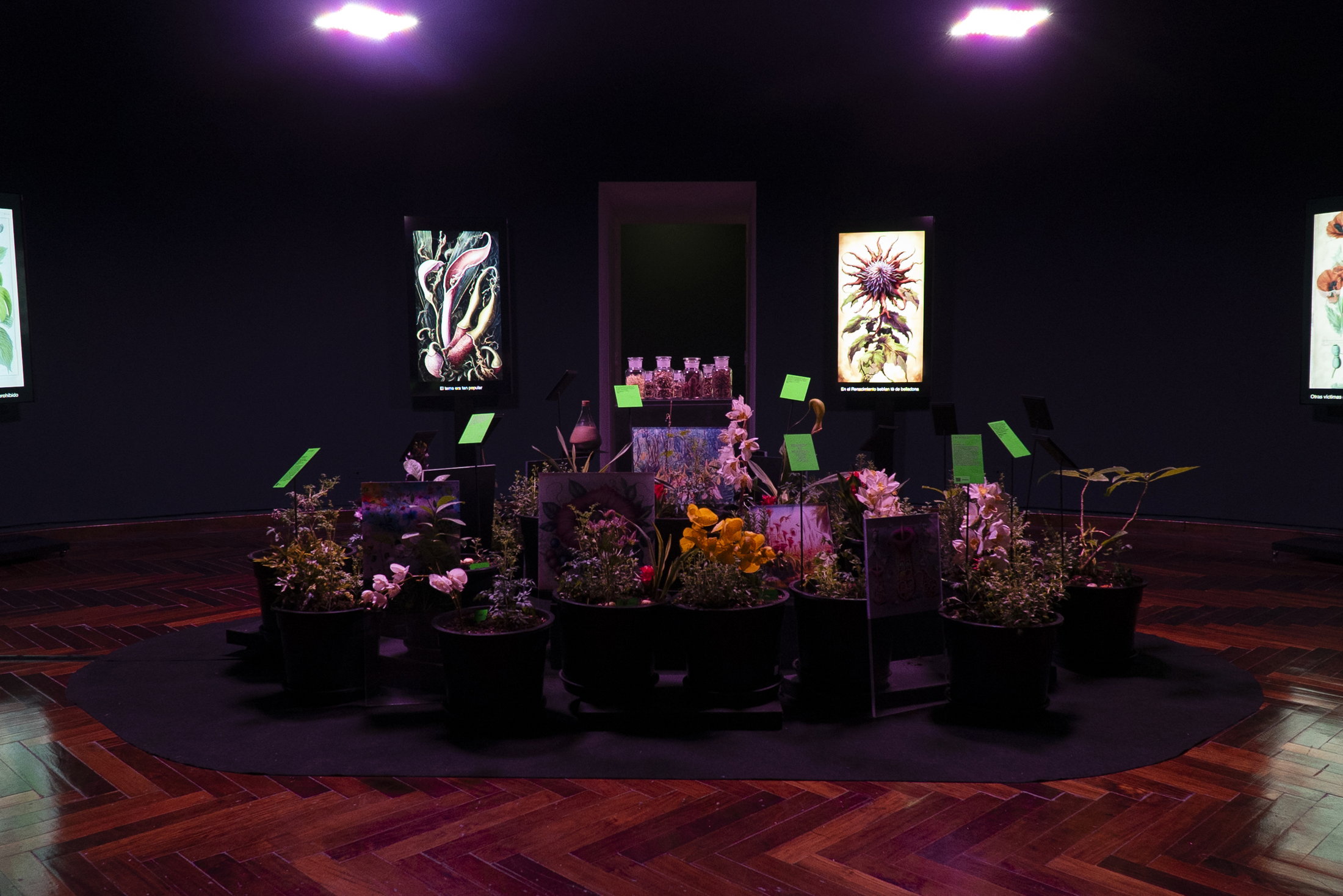
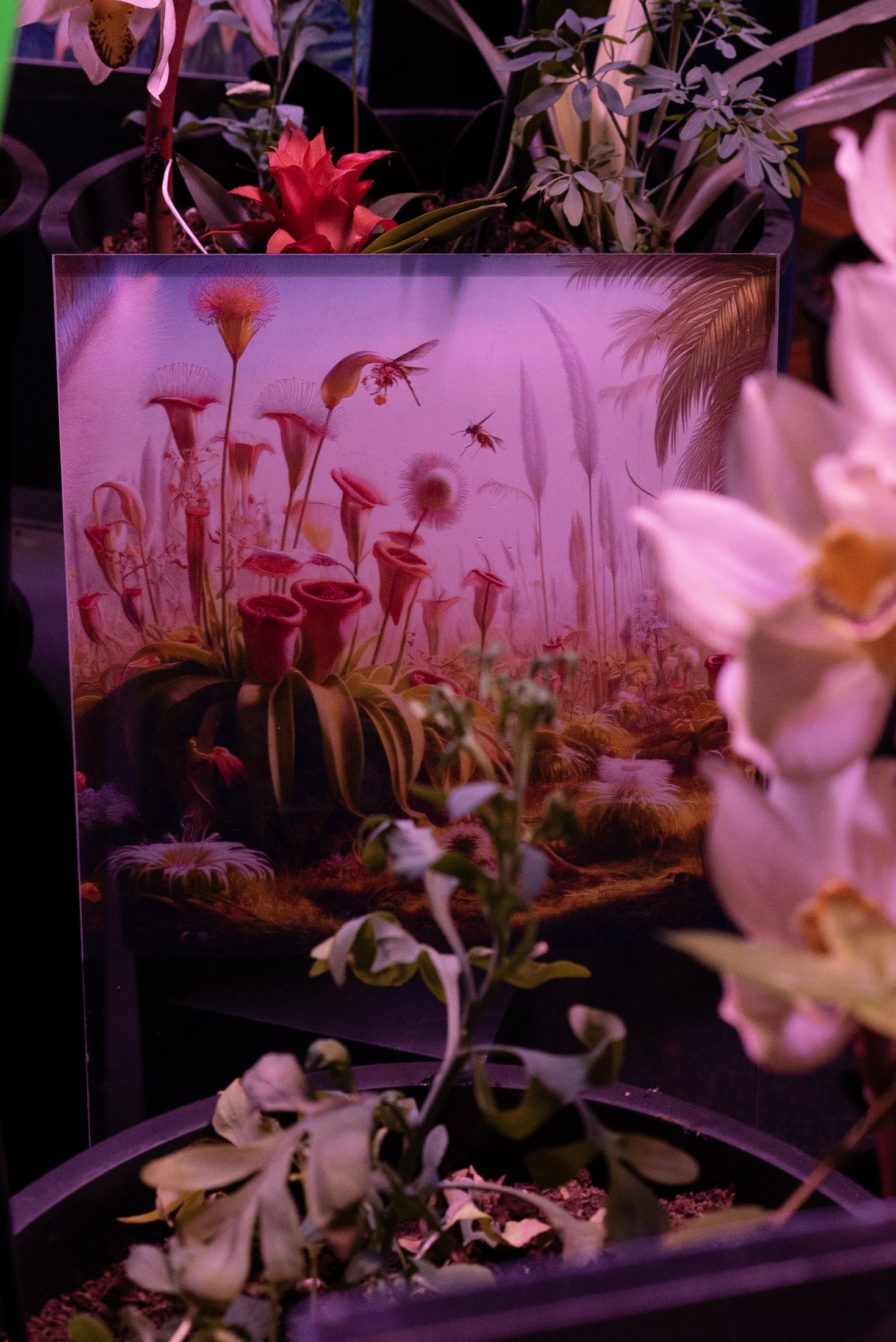
SOSPECHOSAS brings together living, artificial, and fictional plants that coexist within the exhibition space alongside printed and projected images and videos. The exhibition draws on science not only to understand the nature of plants and fungi, but also to connect it to the symbolic traditions of culture, rituals, and healing. It emphasizes the role of artist-scientists—women whose public recognition was delayed or nonexistent due to the gender bias of their respective eras—and engages with technology by utilizing AI, while simultaneously challenging its algorithmic logic.
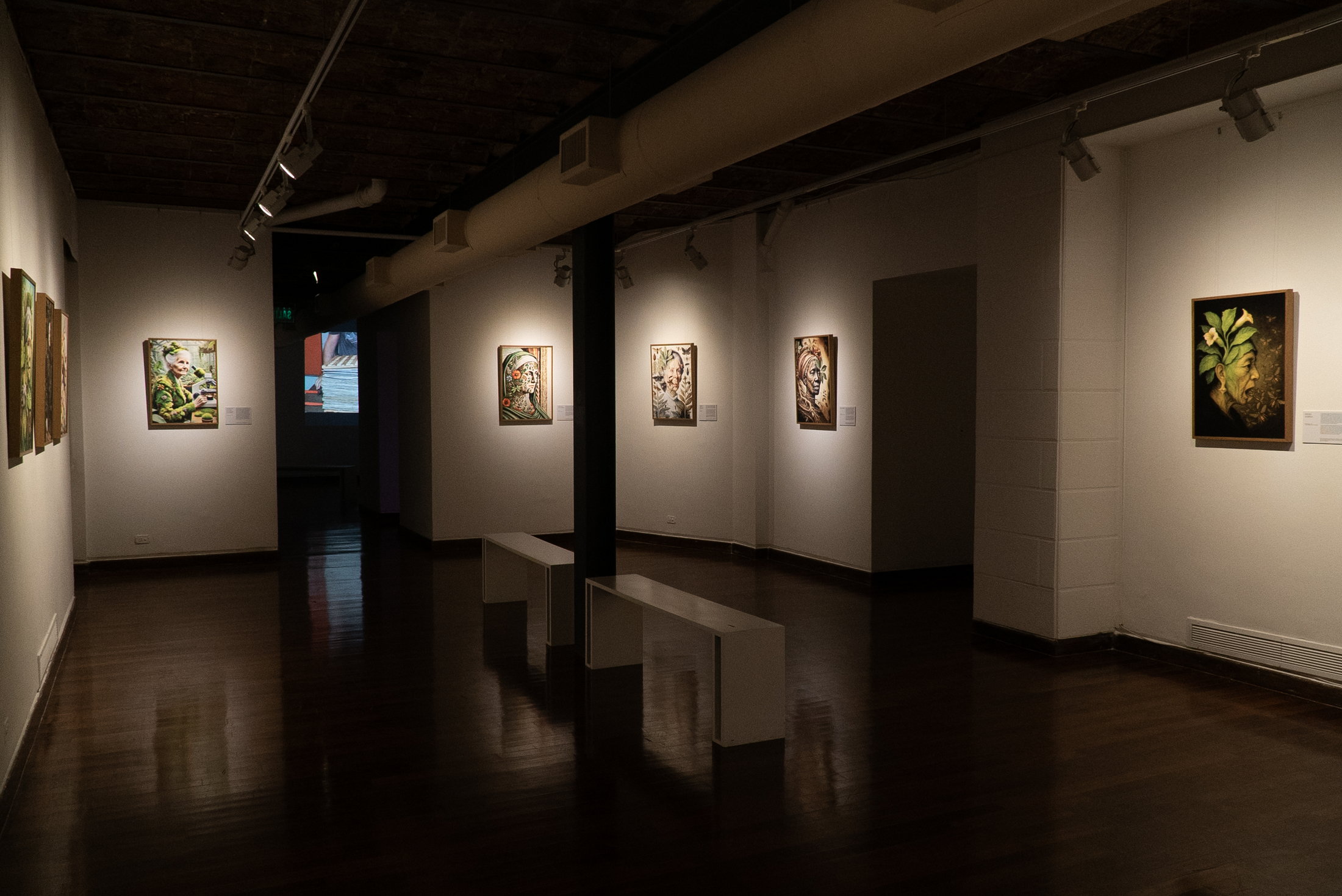
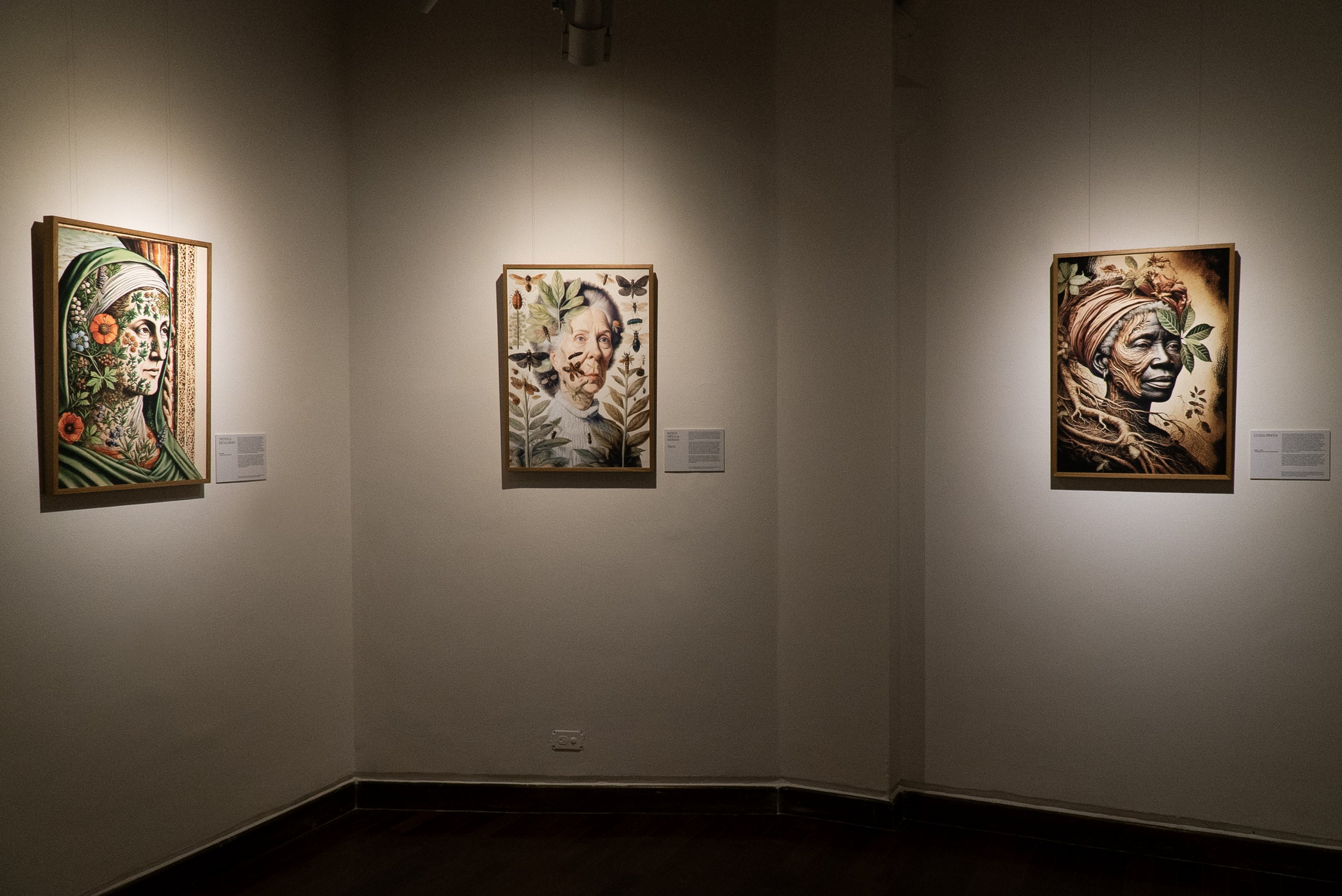
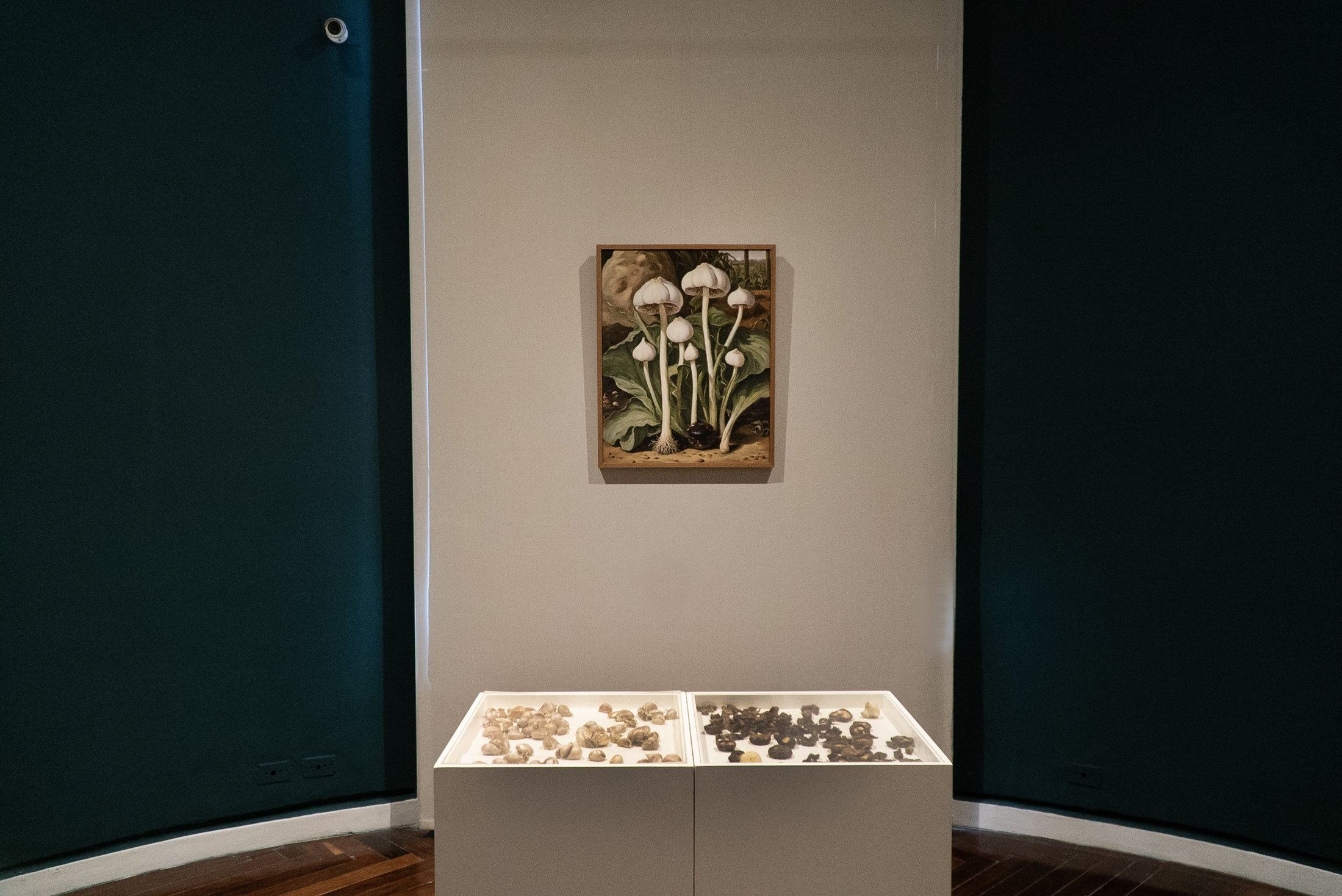
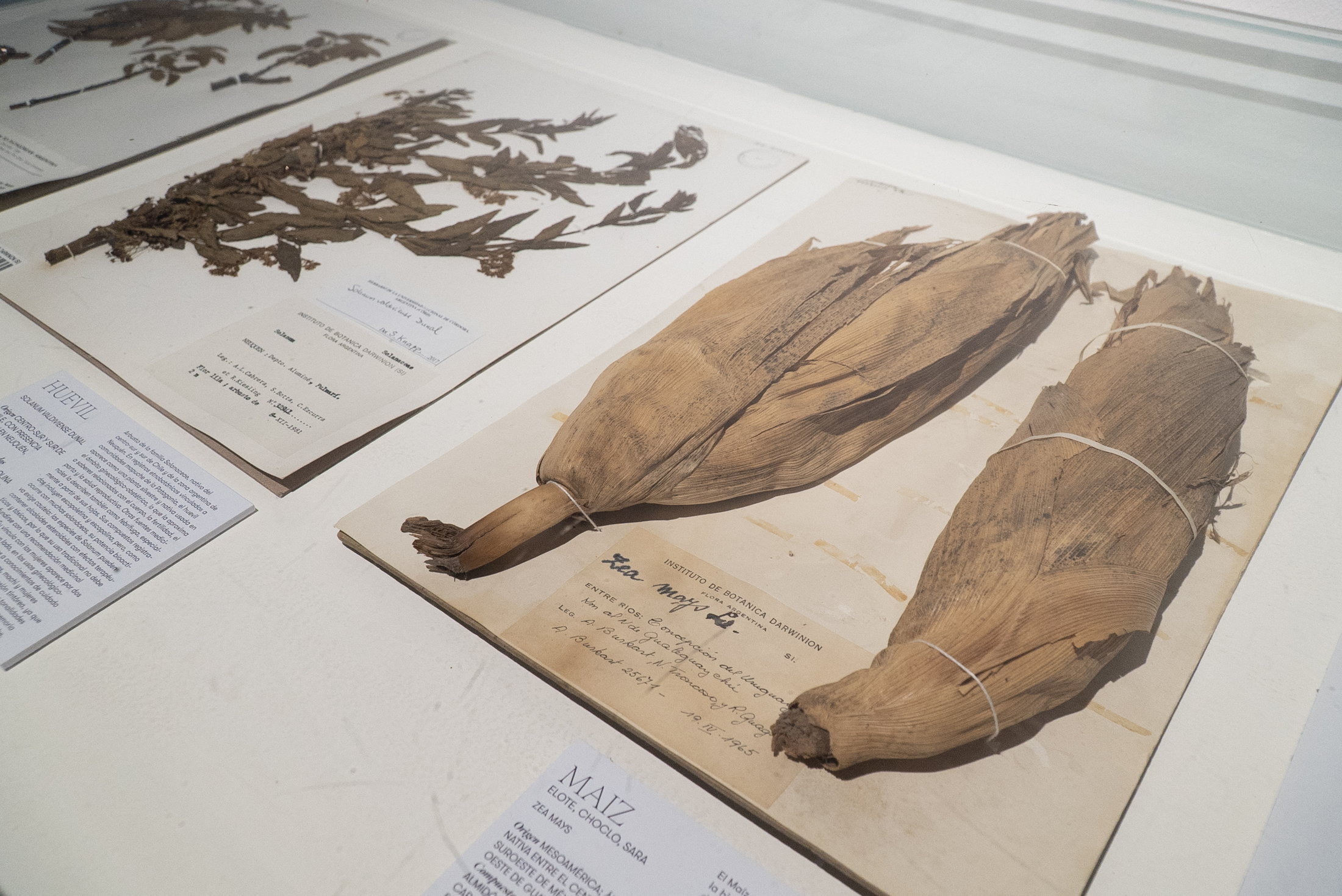
The first room features the *Cogumalhos* series, which includes printed images and specimens of mushrooms and garlic—traditionally identified as ingredients in “suspicious potions” or “symbols of protection”—linked to stories of women and witches. In the second room, the series Quintal das Plantas que se Bifurcam—a title inspired by “El jardín de los senderos que se bifurcan” (Borges, 1941)—features an installation with technical and scientific data, images and videos, live and artificial plants, natural and invented species, and herbs used for medicinal or ritual purposes. In the third room, the new series *Herbarium* pays homage to Argentine botanical research and presents documented regional plants in the form of scientific plates (exsiccatae) and projected images. In the fourth and final room, the series *Artist-Scientists* highlights women who have been silenced or nearly erased from history and includes a portrait—
ely created for this exhibition—of the Argentine pioneer Margarita Zatzkin.
The series of “speculative portraits” created using AI identifies ten female researchers at the end of their lives, in symbiosis with their discoveries, through printed images that challenge the ageism of our time. The exhibition calls for alternative ways of understanding nature and culture, science and technology, in opposition to hegemonic ways of thinking. It is an invitation to both an individual and a collective experience—a rediscovery of aesthetic sensibility, critical awareness, and a sustainable commitment to our immediate surroundings.
Nara Cristina Santos and Fernando Codevilla
Museum of Art, Science, and Technology at the Federal University of Santa Maria (MACT—
UFSM)
Curators
Design: Mariel Szifman
Photos: Georgina García