Giselle Beiguelman, a Brazilian artist and researcher who is one of the most respected worldwide in the field of interaction between art, digital media and information systems, has used Artificial Intelligence platforms in her recent work to bring to light artifacts created throughout history, in science and the arts, with the aim of stigmatizing living beings, most notably women and plants.
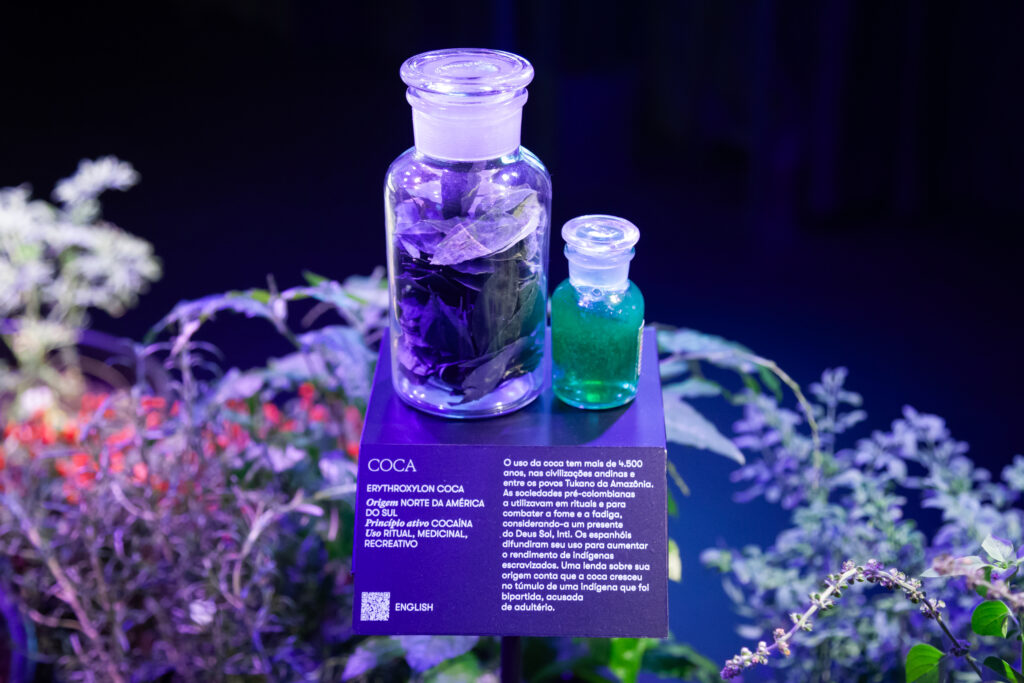
In Poisonous, Noxoius and Suspicious, a title borrowed from a nineteenth-century scientific manual by Anne Pratt (1857), the focus is both on the plants banned by the colonial "civilizing" process because of their psychoactive powers, and on the women botanists who were cursed and erased from history because of the misogyny that runs through the history of science.
Before the official invention of photography in 1839, many women dedicated themselves to studying and documenting species of flora with drawings and watercolors, creating one of the most exciting correlations between art and science. Their illustrations were invariably used in books by male authors without the authors being credited.
By generating images through AI, Beiguelman revisits this pre-photographic era, in most cases to give visibility to women and show us how, ever since the invention - which is suspect - of the original sin of Eve, who ate the forbidden fruit from the tree of paradise, history has associated poisonous, harmful and suspect plants with the female character.
In her experiments, Beiguelman generated images as if she had a magic camera with the power to "photograph" the past and thus repair stories eclipsed by unfounded prejudices and myths. To do so, the artist had to overcome the prevailing ethos of AI platforms, which refused to take portraits of older botanists. The same difficulty arose when trying to create images of indigenous and black Brazilian women.
Just as many women who discovered cures for illnesses through their research of flora were branded as witches, many plants also fell into disgrace because of their aphrodisiac or hallucinogenic properties or because they were used in sacred rituals.
The medicinal use of cannabis, to cite one example, was already known about 3,000 years ago in China and India. But because of its psychoactive properties, it was called the "Devil's weed" and its research in the medicinal field was restricted worldwide from the 1930s onwards. Only in recent years, at the insistence of researchers and families of people in need of cannabidiol treatment, has its medicinal use been gradually released. How many lives, because of this stigma, have failed to find a cure for their illnesses?
Beiguelman's unique work has shown us how it is possible to revisit the past with a critical eye in order to question prejudices and reposition what has been marginalized and neglected for centuries and which, to a painful extent, still persists today. Just as these botanists honored here did, Beiguelman's work also makes research and art illuminate science.
Eder Chiodetto