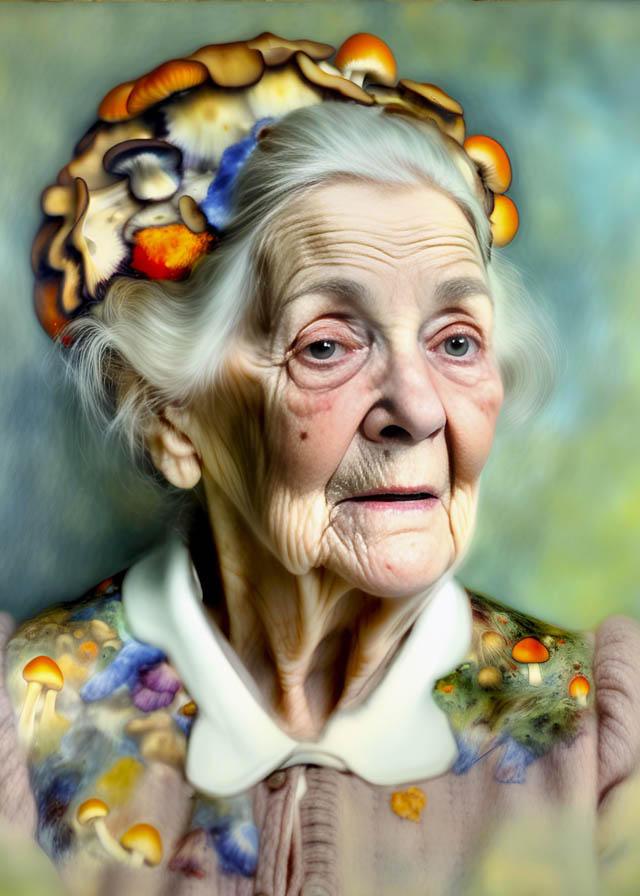
Mary Banning (USA, 1822-1903)
Witch, stinky, dirty and "toadstool lady" were some of the nicknames Mary Banning collected when she boarded the Baltimore streetcars with her arms covered in dirt and roots, returning from her forays into the woods in search of mushrooms. The stench came from the sticky mass of fungal spores on the mushroom cap. Banning astutely proposed that this odor is what attracts flies and other insects responsible for transporting the spores, in the same way that a bee transports pollen. She is the author of The Fungi of Maryland, a manuscript she completed in 1888 after 20 years of research, considered today to be the first scientific work dedicated to American mushrooms. Among the fungi described in her manuscript are 23 species hitherto unknown to science. The rigorous study remained forgotten for almost a century in the drawer of the leading mycologist of the time, Charles Peck, with whom she corresponded for years. The daughter of a wealthy family that became impoverished after her father's death, she was a breadwinner and never married. She died alone in an asylum in Virginia.The Fungi of Maryland, with its 175 impressive watercolors, was found accidentally behind a chicken taxidermy cabinet by the curator of mycology at the New York State Museum, John Haines, in the 1980s. Banning died in 1903, without any recognition.
Image: Portrait of Mary Banning, aged 81, created with artificial intelligence from archive images of the young artist-scientist. 50×76 cm, 2024.
References:
Ivry, Sara. "The Fungi-Mad Ladies of Long Ago." JSTOR Daily, August 9, 2023. https://daily.jstor.org/the-fungi-mad-ladies-of-long-ago/.
Unturned Leaves - Online exhibitions across Cornell University Library. "Mary Elizabeth Banning," April 10, 2019. https://exhibits.library.cornell.edu/unturned-leaves/feature/mary-elizabeth-banning.