Índia Sabina (Belém do Pará, c. 1715 — date and place of death unknown)
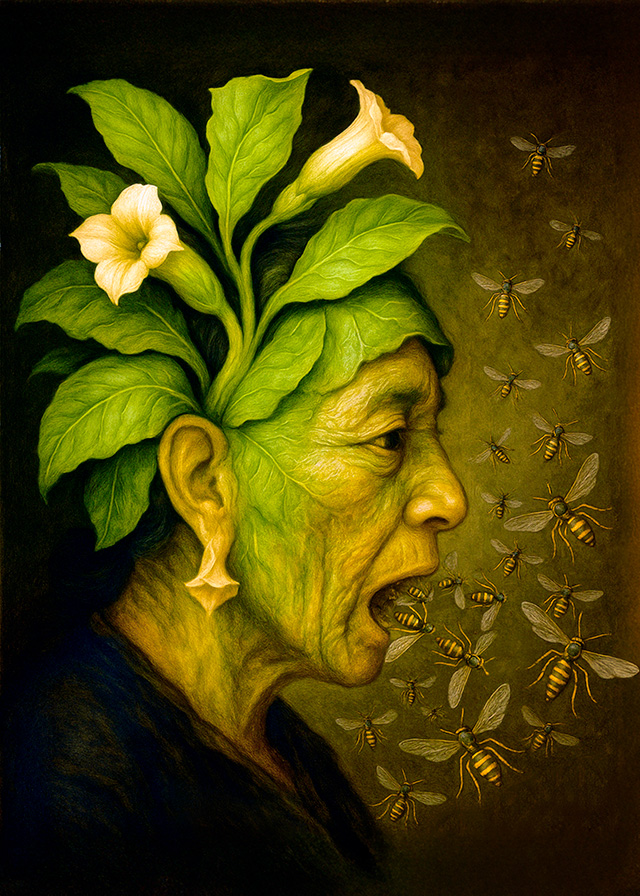
In the Amazon of the 18th century, Índia Sabina gained renown by combining indigenous knowledge and elements of Christianity to break spells and make predictions. In her rituals, she used crosses, holy water, and prayers to the Virgin Mary, but also pipes, local herbs, cinnamon-flavored rum, and incense. She conducted intense ceremonies, inducing patients to purifying vomiting, in which, it was said, lizards, wasps, and fantastic creatures, such as fish-headed centipedes, were expelled. In 1763, she was reported to the Visitation of the Inquisition Tribunal in Belém, accused of "diabolical" practices. Even so, there are indications that she continued to practice, as even her accusers recognized her effectiveness. Almost two centuries later, in Mexico, María Sabina, a Mazatec shaman, also combined indigenous cosmology and Catholic references in healing rituals with sacred mushrooms. The visit of banker and mycologist Robert Gordon Wasson in the 1950s made her practice known to the world and changed her life. Fame brought police persecution and tourist harassment, which led her community to expel her. Living between two worlds, the stories of the two Sabinas feed into each other, highlighting how female shamans, although celebrated, pay the price for challenging the boundaries between the sacred and the profane, knowledge and colonial expropriation.
Portrait of India Sabina, aged 60, created with artificial intelligence, based on information collected in research by Mayara Aparecida de Moraes, Almir Diniz de Carvalho Júnior, and photos of Mazatec shaman María Sabina (1894–1985).