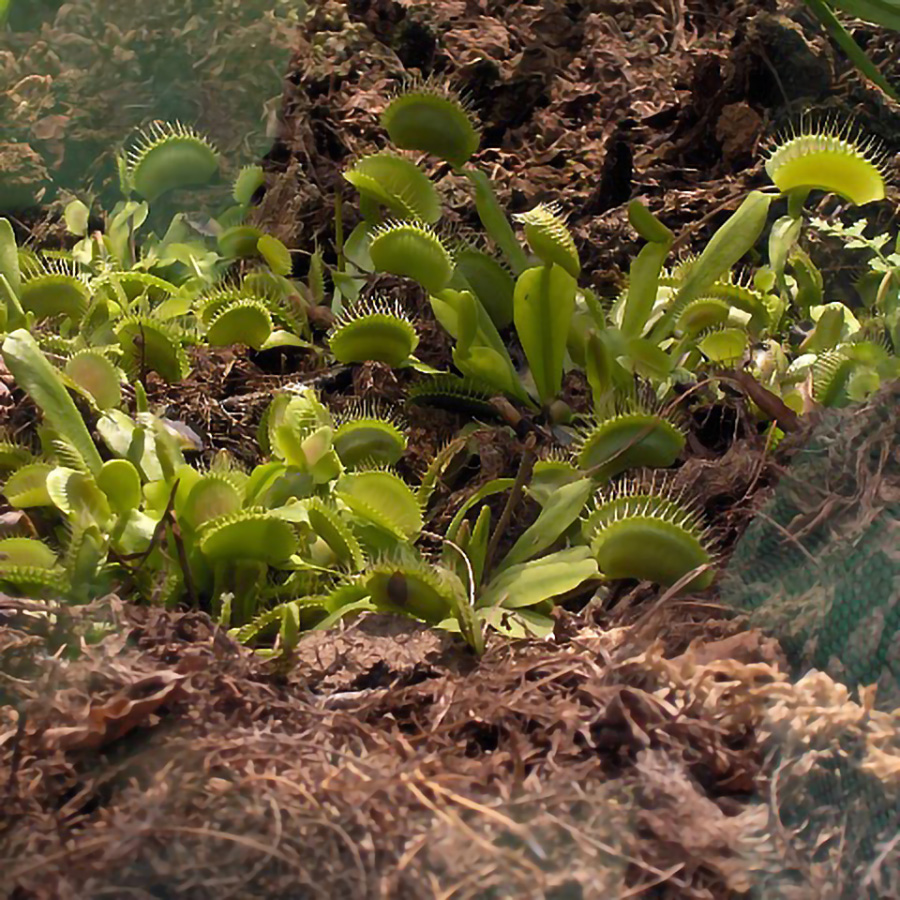
Carnivores
The cultural and scientific fascination with carnivorous plants began in the 18th century, when Dionaea muscipula, known as the "Venus flytrap", was exhibited in London. Its name, associated with the female genital organ, marked a symbolic connection between female sexuality and carnivorous plants, seen as seductive and dangerous. In the 19th century, these plants inspired the "botanical gothic" literary genre and were portrayed as "man-eating plants", reinforcing stereotypes about voracious and seductive women.
More about Carnivores in Poisonous, Harmful and Suspicious
Other plants
References:
CHASE, MARK W., MAARTEN J. M. CHRISTENHUSZ, DAWN SANDERS, and MICHAEL F. FAY. "Murderous Plants: Victorian Gothic, Darwin and Modern Insights into Vegetable Carnivory." Botanical Journal of the Linnean Society 161, no. 4 (December 1, 2009): 329–56. https://doi.org/10.1111/j.1095-8339.2009.01014.x.